
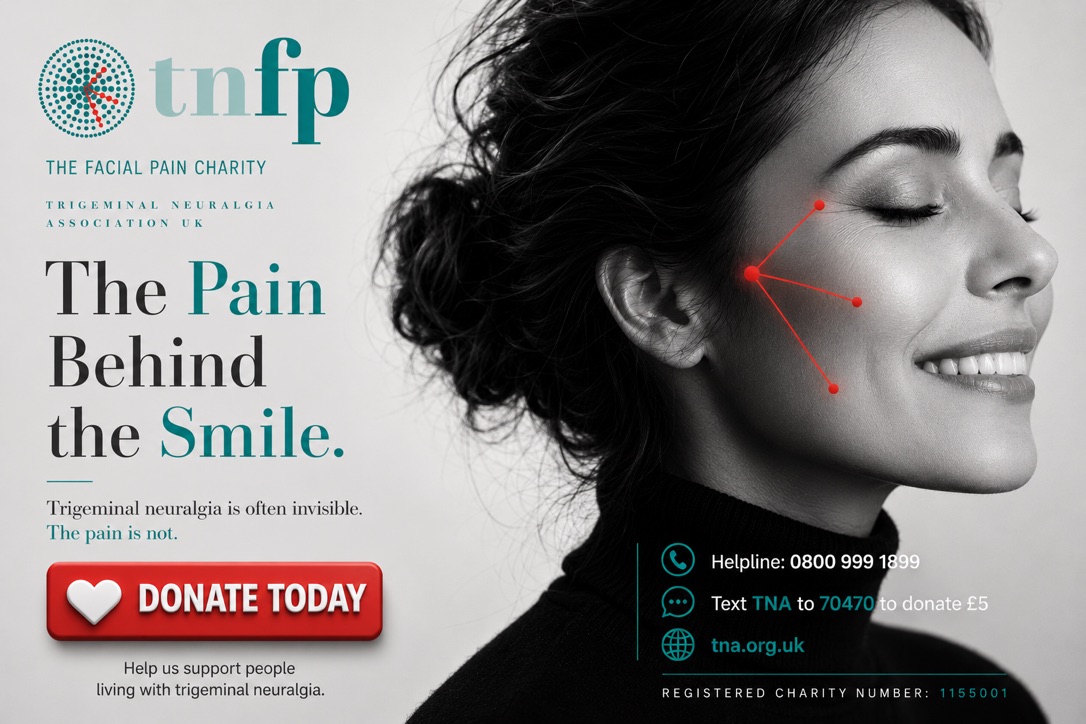
Trigeminal Neuralgia and Dental Pain: The Pain Behind the Smile
Trigeminal neuralgia and dental pain: why this matters
For many people living with trigeminal neuralgia, the dental chair is not routine.
Brushing teeth, cold water, vibration, mouth opening, smiling, chewing or light facial touch can trigger severe facial pain. NICE describes trigeminal neuralgia as sudden, severe facial pain that may be triggered by everyday activities, and NHS patient information also lists brushing teeth, smiling, chewing and washing the face as possible triggers.
Yet patients tell TNA UK that they can feel judged, embarrassed or misunderstood during dental and hygiene appointments. Some avoid brushing certain areas because it may trigger pain. Others dread seeing the hygienist because scaling, water spray or vibration can become unbearable.
This is the pain behind the smile.
Why trigeminal neuralgia can feel like a
toothache
Trigeminal neuralgia is a severe facial pain condition involving the trigeminal nerve. Because the pain can affect the jaw, gums, cheek or teeth, many people first seek help from a dentist.
That is understandable. Trigeminal neuralgia and dental pain can feel very similar.
However, delayed recognition can have serious consequences. The Royal College of Surgeons of England guidance states that TN pain and dental pain can be similar, and that unnecessary dental work can happen as a result.
NICE also advises clinicians to examine the face and oral cavity, including the trigeminal nerves, to rule out dental causes and identify abnormalities needing investigation.
This is not a small issue. It sits at the centre of diagnosis, patient safety and dignity.
Patients should not feel humiliated
When someone with trigeminal neuralgia struggles with brushing, scaling or dental treatment, this should not be treated as a failure of care. Often, pain itself is the barrier.
TNA UK hears from patients who feel ashamed when dental professionals do not understand why ordinary oral care can become difficult. Some describe feeling judged. Others say they have left appointments distressed after comments about brushing or hygiene.
This is not about blame. Most dental professionals want to help. However, dignity has to be part of care.
Patients with trigeminal neuralgia and facial pain may need slower pacing, breaks during treatment, warmer rinses where possible, clear communication before facial contact and understanding when oral hygiene has been affected by pain.
No one should leave a dental or hygiene appointment feeling humiliated because a neurological pain condition has made routine care harder.
What does dental training currently say?
The General Dental Council’s current dentist education framework requires graduates to “diagnose and manage patients’ acute oro-facial and dental pain”. The GDC’s dental therapist framework also requires communication with care, empathy and respect in professional interactions with patients.
Those standards matter. However, trigeminal neuralgia does not appear prominent enough as a named condition in the core national outcomes for every dentist, hygienist and dental therapist.
Specialist and wider pain education resources are clearer. The International Association for the Study of Pain encourages dentistry and oral health programmes to embed pain education and interprofessional pain management. Its dentistry pain curriculum also names trigeminal neuralgia within orofacial pain conditions.
The gap is not that pain is absent from dental education. The gap is visibility, consistency and practical application.
Why dignity matters in the hygienist’s chair
The hygienist’s chair can be one of the hardest places for a person with TN.
Scaling, water spray, suction, cold air, vibration and prolonged mouth opening may all increase fear or trigger pain. A patient may look calm while trying to manage an attack. They may smile because they feel embarrassed, not because they are comfortable.
That is why comments about brushing, hygiene or “not looking after your teeth” can cause real harm when they ignore the clinical reality of TN.
Better awareness would not remove the need for oral care. It would make that care safer, kinder and more realistic.
What TNA UK is asking for
TNA UK believes every dentist, hygienist and dental therapist should receive clearer training on:
- trigeminal neuralgia and neuropathic facial pain;
- how TN can be mistaken for dental pain;
- when to consider medical referral;
- how brushing, scaling, cold water, vibration and facial touch can trigger pain;
- how to adapt care when oral hygiene is affected by neurological pain;
- how to avoid judgment when pain is the barrier;
- how to protect dignity during dental and hygiene appointments.
This is not an attack on dentistry. It is a patient-safety and dignity issue.
The pain behind the smile
Many people with TN become expert at hiding pain. They smile, speak politely, attend appointments and try to manage fear while knowing that one touch, one cold spray or one vibration may trigger an attack.
That invisibility can lead to misunderstanding.
No patient should be made to feel ashamed because a neurological pain condition affects brushing, dental treatment or hygiene care.
The question is simple:
If trigeminal neuralgia is known to mimic dental pain, and brushing teeth is a recognised trigger, why is TN not more visible in routine dental education and patient care?
TNA UK believes this must change.
Support from TNA UK
TNA UK provides information, peer support, Regional Support Groups, an e-helpline and a Freephone helpline for people affected by trigeminal neuralgia and facial pain.
If you are in immediate danger or feel unable to keep yourself safe, call 999 or go to A&E. You can also contact Samaritans on 116 123 for emotional support.
FAQs
Can trigeminal neuralgia feel like a toothache?
Yes. Trigeminal neuralgia can affect the jaw, teeth, gums, cheek or face. This means some people first think they have a dental problem.
Can brushing teeth trigger trigeminal neuralgia?
Yes. Brushing teeth is a recognised trigger for some people with trigeminal neuralgia. Cold water, touch, chewing and mouth movement may also trigger pain.
Should people with TN still see a dentist?
Yes. Dental checks remain important. Patients should tell their dentist or hygienist that they have trigeminal neuralgia or facial pain and explain their known triggers.
What should dental professionals understand about TN?
Dental professionals should understand that brushing, scaling, and dental treatment may trigger severe pain. Patients need dignity, patience, clear communication and careful handling.
Related support and information
Internal links
Further reading
External links
- NHS trigeminal neuralgia symptoms
- NICE trigeminal neuralgia guidance
- Royal College of Surgeons facial pain guidance
- General Dental Council education standards
- IASP dentistry pain curriculum
For TNA UK’s main patient-facing explanation, see Toothache or Trigeminal Neuralgia?
Aneeta Prem MBE is CEO of Trigeminal Neuralgia Association UK. TNA UK supports people affected by trigeminal neuralgia and facial pain through information, peer support, Regional Support Groups, an e-helpline and a Freephone helpline.
Aneeta Prem, London, 10 May 2026
toto togel
situs gacor
toto togel
togel online
togel online
slot gacor
togel online
situs gacor
togel
slot gacor
situs gacor
slot gacor
togel 4d
toto togel
situs togel
link gacor
toto togel
togel online
togel online
situs togel
toto togel
bandar togel
togel online
situs togel
togel online
togel online
link gacor
kampungbet
link gacor
link gacor
kampungbet
togel online
kampungbet
situs togel
bandar togel
situs togel
link gacor
toto togel
kampungbet
kampungbet
kampungbet
kampungbet
kampungbet
kampungbet
kampungbet
kampungbet
kampungbet
kampungbet
kampungbet
kampungbet
kampungbet