2026 Trigeminal Neuralgia Patient Survey — Closed
TNA UK’s 2026 trigeminal neuralgia patient survey is closed. We received 1,310 raw response records. The report is a publication candidate awaiting independent methodological, clinical and qualitative review; its findings are not national prevalence estimates.
Explore the patient research evidence
The survey was created to build a clearer picture of what life with trigeminal neuralgia and facial pain is really like. Too often, the reality of this condition is missed. Diagnosis can take too long. Pain can be mistaken for dental problems. Treatment may be delayed. The daily and emotional impact can be far greater than many people realise.
The separate 2024–25 Patient Experience Survey included 567 consenting respondents. The 2026 survey received 1,310 raw response records and was designed to explore diagnosis, treatment, daily life and patient priorities in greater depth. The two surveys are distinct and must not be combined or described as nationally representative.
Why this trigeminal neuralgia survey matters
I designed this survey to reflect the real experiences of people living with trigeminal neuralgia and facial pain, while also gathering the evidence that funders, researchers and decision-makers need to see.
That matters because lived experience alone is too often overlooked unless it is backed by clear, structured evidence. This trigeminal neuralgia survey helps turn experience into knowledge that can be used. It helps us show what patients go through, where systems fall short, and what needs to change.
The survey covered more than symptoms: diagnosis, pain, treatment, daily life, emotional wellbeing and support. The findings may inform research priorities, service development and policy discussion once analysis and appropriate review are complete.
What the 2026 survey asked
The trigeminal neuralgia survey asked about several important areas.
First, it asked a few background questions, such as age, sex and where people live. These questions help us understand who is responding and whether any patterns appear across different groups or locations.
Next, it asked about diagnosis. It looks at how long the diagnosis took, who first provided help, whether the pain was first thought to be dental, and how many professionals were seen before answers were given. These questions matter because delay and misdiagnosis remain a serious part of many people’s experience.
The survey also asked about pain itself. It explores how the pain feels, how severe it is, how often attacks happen, how long they last, whether pain continues between attacks, and what may trigger it. This matters because trigeminal neuralgia and facial pain do not affect everyone in exactly the same way.
Another section looks at the impact on everyday life. It covers eating, drinking, speaking, brushing teeth, washing the face, sleeping, working, socialising, concentration, relationships and leaving the house. Severe facial pain is not only a medical issue. It can affect almost every part of daily life.
There were also questions about treatment and support. These include medication, procedures, work, access to help, and what people believe TNA UK should prioritise. This helps us understand what is helping, what is missing, and what people need most.
Finally, the survey included open questions. These ask what has been hardest, what doctors should understand better, what would have helped earlier, and what support would make the biggest difference now. Those answers are especially important because they allow people to speak in their own words.
Why the patient evidence matters
Each response to the trigeminal neuralgia survey adds individual experience to the dataset, which must be interpreted with appropriate methodological care.
Whether diagnosis came quickly or after years of uncertainty, whether pain comes in sudden attacks or stays in the background every day, whether someone is newly diagnosed or has lived with this condition for many years, each response has value. No experience is too small. No journey is unimportant.
The responses offer valuable insight into participants’ experiences, but this self-selected survey cannot establish national prevalence or represent every person with trigeminal neuralgia. Its detailed analysis is still being reviewed.
Responses were welcomed from outside the UK as well as within it. International participation can contribute a broader range of experiences, but country-level comparisons require careful methodological interpretation.
2026 survey: closed to new responses
The survey has closed. Responses were collected for analysis of patient experiences. Any contact details supplied for follow-up were requested separately and must be handled in accordance with the charity’s privacy safeguards.
If completing the survey yourself is difficult, a family member, friend or carer can complete it on your behalf.
Thank you to everyone who participated in this trigeminal neuralgia survey. TNA UK will only present findings once the appropriate review and quality checks have been completed.
Read the 2026 survey evidence:
TNA UK research and patient voice
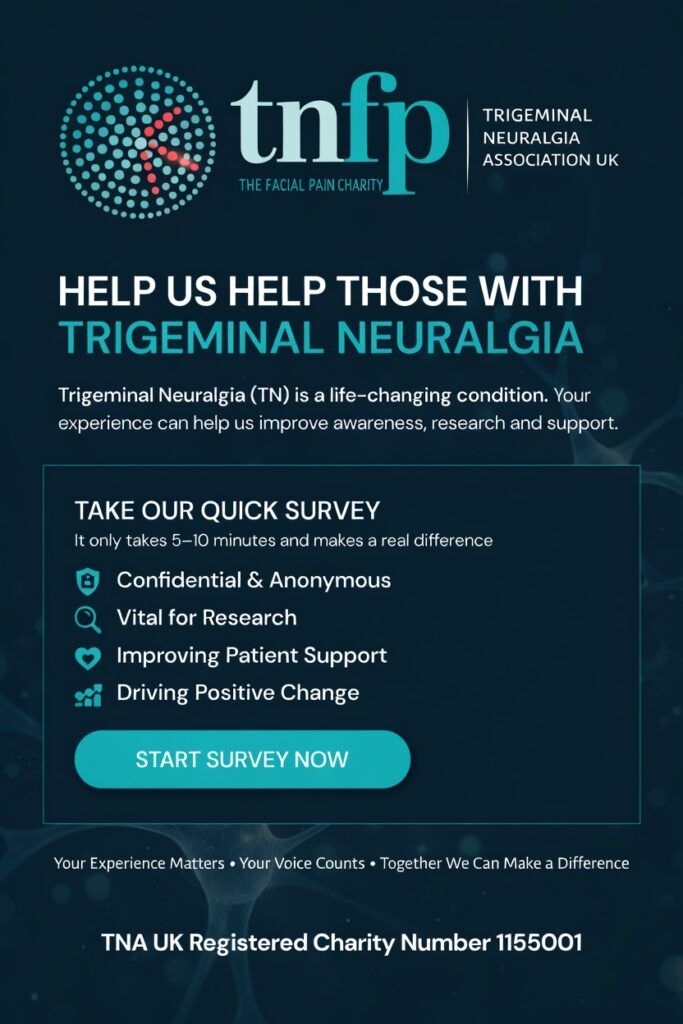
Original 2026 survey poster (archived)
This invitation is preserved as a historical record. The survey is now closed; please do not use the poster or its QR code to submit a response.
Aneeta Prem MBE
CEO, TNA UK