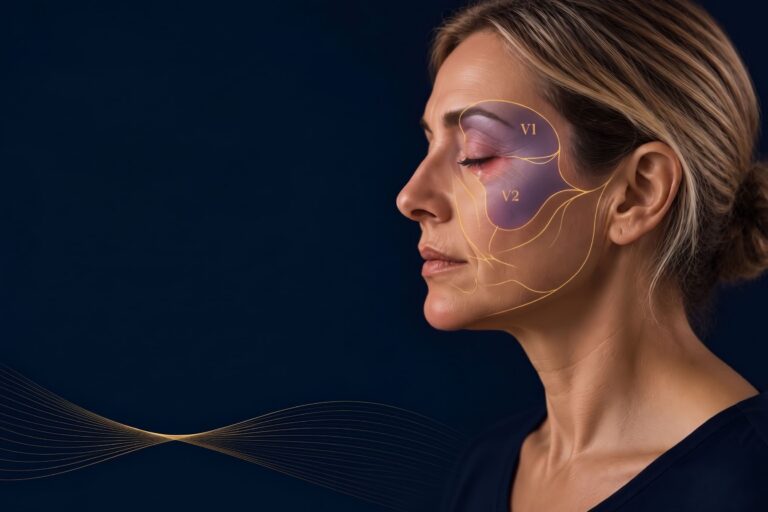
Facial pain is not one condition. Similar pain can have very different causes. Understanding the pattern can help lead to the right assessment, treatment and support.
EXPLORE FACIAL PAIN CONDITIONS
Facial pain conditions
Open a condition for a short introduction, then follow the link for the full guide.
The words facial pain tell us where somebody hurts. They do not tell us why.
Pain in the face can come from the teeth and gums, the jaw joint and chewing muscles, nerves, migraine and headache disorders, shingles and other conditions. Some can feel surprisingly similar even though the assessment and treatment may be very different.
The aim is not to find the quickest label. It is to find the right explanation.
The same place can hurt for very different reasons.
That is why the pattern, timing, triggers and accompanying symptoms matter.
The pattern matters
Where the pain is felt is only part of the story. Clinicians may also need to know whether it is on one side or both, how long attacks last, what the pain feels like, what triggers it and whether there are other symptoms such as numbness, jaw stiffness, eye redness or tearing, nausea or light sensitivity.
A short pain diary cannot diagnose the cause, but it can make these details much easier to explain at a dental or medical appointment.
When facial pain needs urgent assessment
Most facial pain is not a medical emergency. However, persistent facial numbness or abnormal neurological signs need prompt medical assessment. NICE recommends urgent referral for neuroimaging in adults with facial pain and either of these features.
If symptoms are sudden, severe, rapidly worsening or accompanied by new neurological problems, seek appropriate urgent medical advice. Read the relevant NICE guidance.
What to do next
If pain appears to come from the teeth or gums, an appropriate dental assessment is an important first step. If no clear dental cause is found and the pain is frequent, persistent or recurring, speak to your GP or another appropriate healthcare professional.
Take a short description of the pain with you: where it is, how long it lasts, what it feels like, what triggers it and anything else that happens at the same time.
Do not stop prescribed medicine or change the dose because of something you have read online without appropriate clinical advice.
7 October: Trigeminal Neuralgia Awareness Day
October is Facial Pain Awareness Month. On 7 October, we put a special spotlight on trigeminal neuralgia.
Our 2026 Show TN 3 Fingers campaign uses three fingers to represent the three main divisions of the trigeminal nerve — V1, V2 and V3 — and starts a simple conversation about a condition too few people recognise.
Facial pain does not end when awareness month does. TNA UK provides information, support and signposting through our helplines, Regional Support Groups, webinars and practical resources.