Home » Multiple sclerosis, trigeminal neuralgia and facial pain
Multiple sclerosis, trigeminal neuralgia and facial pain
Multiple sclerosis can be associated with trigeminal neuralgia and other forms of nerve pain affecting the face. Not every facial pain symptom in someone with MS is trigeminal neuralgia, so careful assessment matters.
Multiple sclerosis, trigeminal neuralgia and facial pain
Multiple sclerosis, usually shortened to MS, affects the brain and spinal cord. Damage to myelin, the protective covering around nerve fibres, can interrupt normal nerve signalling.
The facial pain most clearly associated with MS is secondary trigeminal neuralgia. However, people with MS may also experience central neuropathic pain, migraine, dental pain, jaw pain or another unrelated condition.
A known diagnosis of MS should not prevent ordinary medical and dental causes from being considered.
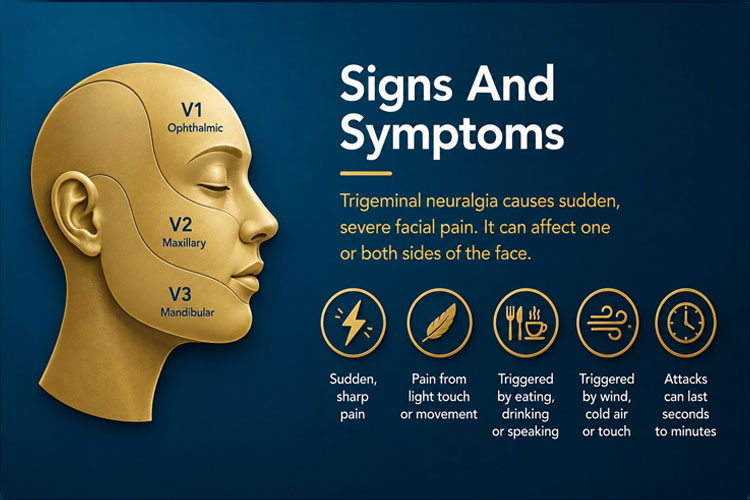
Signs And Symptoms
Brief electric shock-like, stabbing or shooting facial attacks
Pain triggered by light touch, eating, speaking, brushing teeth, washing or wind
Burning, tingling, crawling, squeezing or continuous facial pain
Numbness or altered facial sensation
Pain on one side or, in some people, both sides
New weakness, visual symptoms, balance problems or other neurological changes
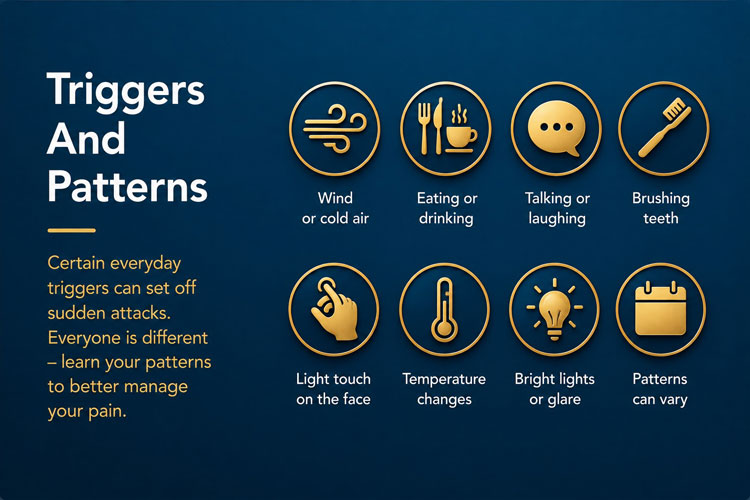
Triggers And Patterns
Touch, chewing, speaking, dental care and cold air when the pattern is TN
Symptoms may be spontaneous or may change during illness, an MS relapse or medicine changes
Not every persistent facial sensation has a clear trigger
Assessment Or Diagnosis
Assessment starts with the pain history rather than the MS diagnosis alone. A clinician may ask where the pain occurs, how long it lasts, whether it is triggered, whether pain continues between attacks and whether sensation has changed.
Care may involve a GP, dentist, neurologist, MS team, headache clinic, oral medicine service, pain clinic or neurosurgical team.
MRI may help identify a demyelinating lesion or another cause, but a scan does not replace clinical assessment and should not be interpreted in isolation.
Treatment And Management
Treatment depends on the diagnosis. TN, central neuropathic pain, migraine, TMD and dental disease require different approaches.\n\nTN may be treated through the TN pathway. Other neuropathic pain may be treated with medicines used for nerve pain, taking account of MS medicines, other health conditions and possible interactions.\n\nSpecialist review may be needed when pain is severe, the diagnosis is uncertain, medicines are not tolerated or pain remains uncontrolled.\n\nLatest research: A systematic review published in October 2026 examined surgical treatments for trigeminal neuralgia associated with multiple sclerosis. It reinforces the importance of individual assessment, imaging, treatment risks and the possibility of recurrence. Read: TN Surgery in MS.
Living with the condition
Facial pain can add to fatigue, uncertainty and cognitive load. It may affect eating, speech, sleep, work and independence.
A pain record can help distinguish brief attacks from persistent symptoms and show whether pain changes alongside other neurological symptoms.
What you can do today
Record brief shock-like attacks separately from burning, numbness or continuous pain.
Note whether facial symptoms change alongside other neurological symptoms, infection, relapse or medicine changes.
Contact the GP, neurologist or MS team about new, changing or poorly controlled symptoms.
Continue ordinary dental care and have new tooth or jaw symptoms assessed rather than assuming they are caused by MS.
Preparing for your appointment
Exact location, side and quality of the facial pain
Whether pain is brief and triggered, persistent, or both
Any numbness, weakness, visual change, balance problem or other new neurological symptom
Whether symptoms changed during a relapse, infection or medicine change
Dental, jaw, headache or sinus symptoms that may suggest another cause
Current MS and pain medicines, treatment response, side effects and effect on daily function
When pain is affecting your wellbeing
Managing facial pain alongside MS fatigue, uncertainty and other symptoms can be exhausting.
Support for sleep, anxiety, low mood and coping can sit alongside medical treatment. It does not mean the pain is imagined.
If you feel unable to keep yourself safe, call 999 or go to A&E. For urgent mental-health help that is not an immediate emergency, use NHS 111 and select the mental-health option where available.
For family members and carers
Help distinguish new facial pain from the person’s usual MS symptoms without assuming the cause.
Support a clear symptom and medicine record for the GP, neurologist or MS team.
Encourage dental assessment for new tooth or jaw symptoms.
Act urgently on sudden weakness, speech difficulty, vision loss, confusion or rapidly worsening neurological symptoms.
Frequently Asked Questions
Answers to common questions
Yes. MS is a recognised cause of secondary TN, although most people with TN do not have MS.
No. Dental, jaw, headache and other neuropathic causes must also be considered.
It can, particularly with MS-related or central neuropathic pain, but a new bilateral pattern should be assessed.
Yes. MS does not rule out dental disease or TMD.
Related Conditions and Topics
Other facial pain conditions and useful information
This information is for general guidance and does not replace professional medical advice. Always consult your healthcare professional.
Latest News
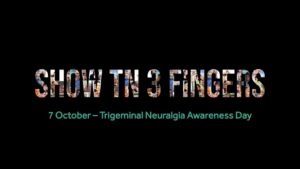
TN Awareness Day 2026: Show TN 3 Fingers Passes 250,000 Views
TNA UK’s Show TN 3 Fingers and Face of TN campaign has passed 250,000 YouTube views, marking a quarter of a million views for trigeminal neuralgia awareness.