TNA UK CEO Update: Vote, Donate and Help Make TN Visible
A message from Aneeta Prem MBE, Chief Executive Officer of Trigeminal Neuralgia Association UK
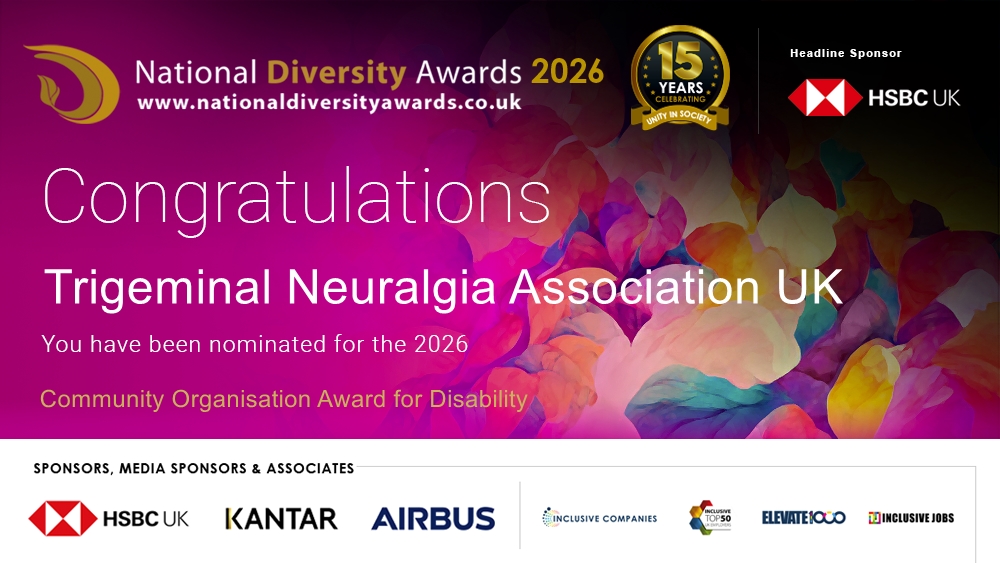
TNA UK has been nominated for the Community Organisation Award for Disability in the National Diversity Awards. Public voting remains open until 20 May 2026.
This TNA UK CEO update highlights several ways supporters can help make trigeminal neuralgia, facial pain, invisible illness and hidden disability more visible.
Too many people living with trigeminal neuralgia still feel invisible while living with one of the most severe pain conditions in medicine.
Many people look well to the outside world while managing pain that can affect eating, speaking, brushing teeth, washing, sleeping, working, confidence, relationships and independence.
A vote for TNA UK helps make trigeminal neuralgia harder to ignore.
<a href=”https://nationaldiversityawards.co.uk/nominate/32484/” target=”_blank” rel=”noopener”>Vote for TNA UK</a>
Why voting for TNA UK matters
Public recognition matters because trigeminal neuralgia is still poorly understood.
When the voting page opens, supporters will be asked to add their name, email address and a short reason for supporting TNA UK.
A few honest sentences are enough. Supporters may wish to mention TNA UK’s Freephone helpline, e-helpline, Regional Support Groups, webinars, conferences, patient voice work, hidden disability, or why trigeminal neuralgia needs better public understanding.
Genuine votes matter because they show the real impact of this condition on real lives.
Supporters who have already voted can still help by sharing the voting link with family, friends, colleagues, carers, clinicians and anyone else willing to support the charity.
Every vote helps make trigeminal neuralgia and facial pain more visible.
Samuel Gassner ran the Copenhagen Marathon for TNA UK
Samuel Gassner ran the Copenhagen Marathon on Sunday 10 May 2026 in support of TNA UK, raising more than £1,800 for the charity’s work.
He completed the marathon in 3 hours and 40 minutes, despite injuring his back halfway through.
Samuel ran for his mother, who has lived with trigeminal neuralgia since he was very young. He described seeing shock-like, stabbing pain affect the right side of her face and force her to stop, rest and wait for the attack to pass.
This condition does not only affect the person living with the pain. It also affects children, partners, parents, carers and families who watch someone they love live with a condition that is still too poorly understood.
There is no single guaranteed cure for everyone with TN, and research still needs greater investment. That is why awareness, support and patient voice matter so much.
Samuel’s fundraiser remains open for donations. Every gift helps TNA UK continue supporting people affected by trigeminal neuralgia and facial pain through information, listening support, signposting, Regional Support Groups, webinars, conferences and patient voice work.
Thank you to Samuel, Laura and their family for standing with TNA UK and helping more people understand the reality of trigeminal neuralgia.
<a href=”https://www.tna.org.uk/donate/” target=”_blank” rel=”noopener”>Donate to Samuel’s Copenhagen Marathon fundraiser</a>
National Smile Month and trigeminal neuralgia
National Smile Month runs from 11 May to 11 June 2026. It is a reminder of how deeply trigeminal neuralgia can affect something many people take for granted.
For most people, a smile is linked with confidence, connection and health.
For many people living with TN, a smile can hide pain.
TNA UK members often tell us how much this condition can affect teeth, brushing, eating, speaking, dental appointments and confidence. For some people, cold water, suction, scaling, vibration, mouth opening or light facial touch can trigger severe pain.
Many people with TN first seek help from a dentist because the pain can feel as if it is coming from the teeth, jaw or gums. Dental pain must always be checked properly. Infection, decay, gum disease, cracks and other dental problems need proper dental assessment and care.
The difficulty comes when severe, electric-shock-like pain continues and no dental cause is found.
TN is nerve pain. It is not dental disease.
When pain sounds dental but behaves like nerve pain, trigeminal neuralgia should be considered.
That does not mean every toothache is TN. It means that severe, sudden, repeated facial pain, especially when triggered by brushing teeth, chewing, speaking, washing, touch or cold air, needs careful recognition.
<a href=”https://www.tna.org.uk/news/toothache-or-trigeminal-neuralgia/” target=”_blank” rel=”noopener”>Read Toothache or Trigeminal Neuralgia?</a>
The dental chair is not always routine
For many people already diagnosed with TN, dental care can be frightening.
Brushing teeth, cold water, suction, scaling, vibration, mouth opening and light facial touch can all trigger pain. Some people avoid parts of the mouth when brushing because they fear an attack. Others dread hygiene appointments because one movement, one cold spray or one vibration may be enough to set off severe pain.
That can affect confidence. It can also lead to shame, especially when people feel judged rather than understood.
No one should leave a dental or hygiene appointment feeling ashamed because a neurological pain condition has made routine care harder.
Patients may need slower pacing, breaks during treatment, warmer rinses where possible, clear warning before facial contact, and understanding when pain has affected oral care.
This is not an attack on dentistry. It is about safer, kinder and better-informed care.
<a href=”https://www.tna.org.uk/news/the-pain-behind-the-smile/” target=”_blank” rel=”noopener”>Read The Pain Behind the Smile</a>
TN affects more than pain
Trigeminal neuralgia can also affect mental health and daily life.
The pain can be sudden, severe and frightening. The fear of the next attack can also change how someone lives.
People may avoid eating certain foods. Some speak less because talking can trigger pain. Some stop going out in cold weather. Others avoid social occasions because they do not know whether pain will flare.
TN can affect work, sleep, relationships, confidence and ordinary routines that many people take for granted.
Medication can also affect daily life. Some people may have less pain but feel tired, dizzy, foggy, slowed down or unsteady. Patients should never start, stop or change medication without medical advice. However, side effects should be taken seriously and discussed with a GP, pharmacist, neurologist or specialist pain team.
Pain scores alone do not show the whole picture.
People need to be asked whether they can eat, sleep, speak, work, leave home, maintain relationships and feel safe. They also need to be asked how the condition affects confidence, independence, family life and emotional wellbeing.
The message from members is clear. No one should have to face this condition alone.
<a href=”https://www.tna.org.uk/news/trigeminal-neuralgia-and-mental-health/” target=”_blank” rel=”noopener”>Read Trigeminal Neuralgia and Mental Health</a>
New research supports what patients have said for years
A major Swedish study has added important evidence to what many patients already know. It found higher rates of serious long-term health and safety outcomes among people with trigeminal neuralgia compared with the wider population.
The study does not prove that TN directly caused those outcomes. However, it does show an association that deserves serious attention.
The findings support what many people with TN have said for years: this condition affects far more than the face. It can affect safety, sleep, eating, confidence, work, mental health, family life and independence.
The response must include better recognition, better referral, proper medication review, access to specialist advice, emotional support, practical support and greater investment in research.
Trigeminal neuralgia should be recognised as a serious neurological pain condition with physical, emotional and social consequences.
<a href=”https://www.tna.org.uk/news/” target=”_blank” rel=”noopener”>Read Swedish Trigeminal Neuralgia Study</a>
New TNFP awareness products
New TNFP awareness products are now available in the Teemill shop, including T-shirts, active T-shirts and mugs.
The range includes TNFP circle logo T-shirts, front-and-back printed active T-shirts, and mugs. These products offer a simple way to help spread awareness of trigeminal neuralgia and facial pain in everyday life.
Wearing or using something that names trigeminal neuralgia and facial pain can start conversations. It can also help make invisible pain more visible.
<a href=”https://tnfp.teemill.com/” target=”_blank” rel=”noopener”>Visit the TNFP awareness shop</a>
TNA UK support
TNA UK continues working to make sure people affected by trigeminal neuralgia and facial pain are heard, understood and supported.
The charity provides information, a Freephone helpline support, an e-helpline support, Regional Support Groups, webinars, conferences and patient voice work.
No one should have to explain this condition from the beginning every time they ask for help.
For support:
TNA UK Freephone Helpline: 0800 999 1899
Email: [email protected]
Website: https://www.tna.org.uk/
TNA UK can offer information, listening support and signposting. It cannot give medical advice, prescribe medication or replace care from a GP, dentist, neurologist, pain specialist or emergency service.
Help make TN visible
Supporters can help TNA UK by voting, donating, sharing information, buying an awareness product, joining a Regional Support Group or helping one more person understand what trigeminal neuralgia and facial pain can mean.
Your support helps raise awareness of trigeminal neuralgia, facial pain, invisible illness and hidden disability.
<a href=”https://nationaldiversityawards.co.uk/nominate/32484/” target=”_blank” rel=”noopener”>Vote for TNA UK</a>