Trigeminal Neuralgia at Work: Hidden Disability and Accessibility Rights
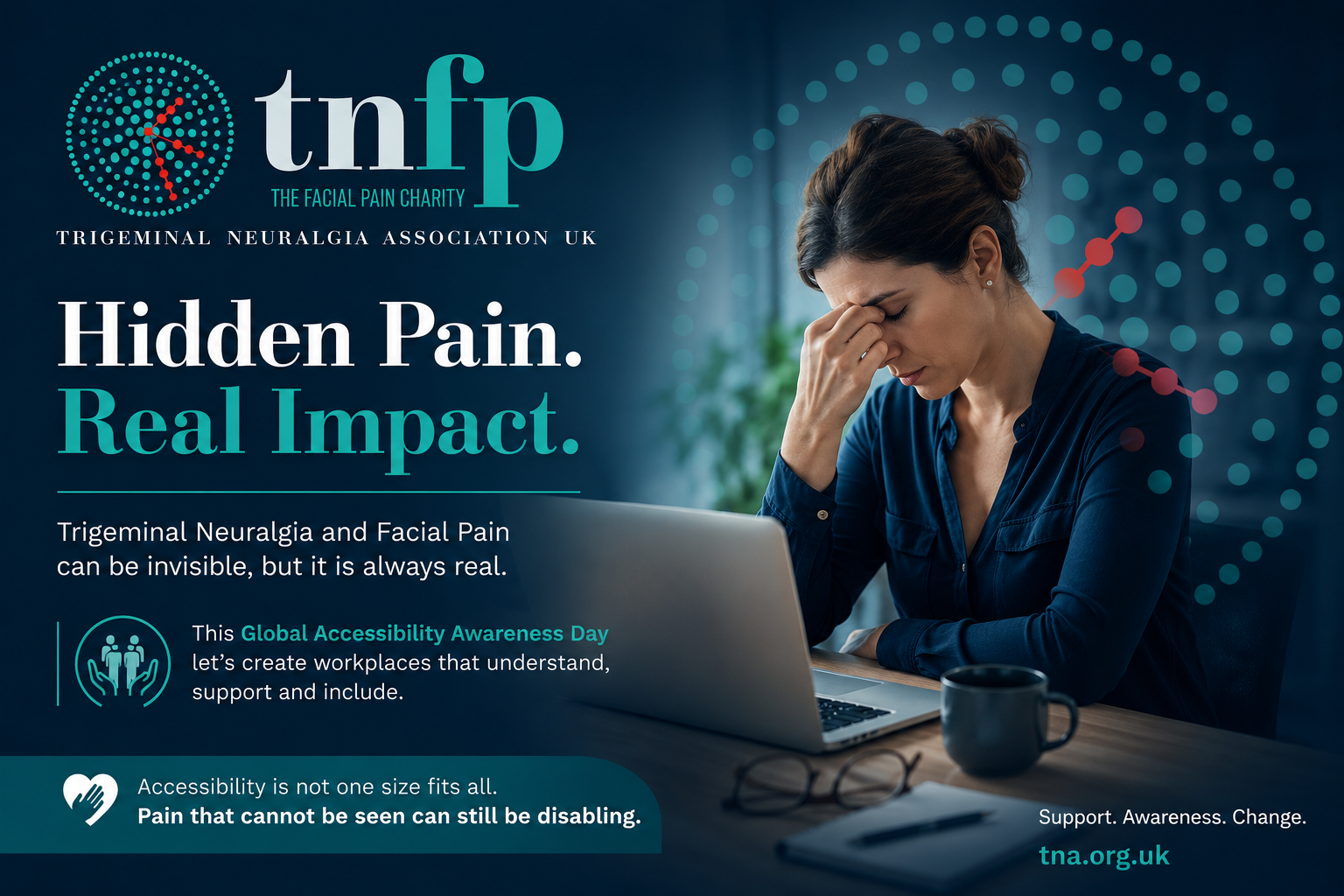
Today is Global Accessibility Awareness Day. It highlights access, inclusion and equal participation for disabled people.
For TNA UK, this conversation must include people living with trigeminal neuralgia and facial pain. Accessibility is not only about ramps, lifts or buildings. It is also about whether people with severe hidden pain can work safely, communicate clearly and remain in employment with dignity.
Why trigeminal neuralgia at work matters
Many people living with trigeminal neuralgia describe feeling invisible at work. Someone may look well while struggling to speak, eat, smile, concentrate, tolerate cold air or complete a normal working day without triggering severe facial pain.
The NHS describes trigeminal neuralgia as sudden, severe facial pain that can feel like electric shocks in the face. Common triggers include eating, speaking, brushing teeth, washing the face and even wind against the skin.
NHS information on trigeminal neuralgia:
https://www.nhs.uk/conditions/trigeminal-neuralgia/
As a result, the condition can affect confidence, communication, attendance, mental wellbeing and the ability to remain in work.
Hidden disability and the Equality Act
Not every person with trigeminal neuralgia will automatically meet the legal definition of disability. However, many people with trigeminal neuralgia and facial pain may qualify for protection under the Equality Act 2010 where the condition has a substantial and long-term effect on normal day-to-day activities.
Under UK law, employers must consider reasonable adjustments where a disabled worker would otherwise face substantial disadvantage.
Equality Act 2010:
https://www.legislation.gov.uk/ukpga/2010/15/contents
That distinction matters because the law looks at the impact of the condition, not only the diagnosis.
Reasonable adjustments for facial pain
Reasonable adjustments for trigeminal neuralgia and facial pain may include flexible working hours, remote or hybrid working, reduced telephone duties, written communication instead of prolonged meetings, protected breaks during flare-ups, changes to cold air or harsh air conditioning, and flexibility around medical appointments or surgery recovery.
ACAS guidance on reasonable adjustments:
https://www.acas.org.uk/reasonable-adjustments
In practice, small changes can make a significant difference. They may help someone stay in work, reduce avoidable triggers and protect dignity during difficult periods.
Severe pain can affect working life
Trigeminal neuralgia and facial pain do not only affect physical comfort. Severe neurological pain can also affect sleep, concentration, social interaction and confidence in the workplace.
For example, some people fear speaking because conversation itself can trigger pain. Others worry about appearing unreliable because attacks are unpredictable.
NICE recognises the significant impact chronic neuropathic pain can have on daily functioning and quality of life.
NICE guidance on neuropathic pain:
https://www.nice.org.uk/guidance/cg173
Despite this, many people with facial pain still report feeling misunderstood because their condition is largely invisible.
TNA UK’s message on accessibility
TNA UK believes hidden neurological pain must be part of the accessibility conversation.
Pain that cannot be seen can still be disabling. Therefore, workplaces must not mistake invisibility for insignificance.
On Global Accessibility Awareness Day, TNA UK is calling for greater understanding of trigeminal neuralgia at work and better recognition of hidden facial pain disability.
Why this matters to employers
Employers may not realise how trigeminal neuralgia at work can affect ordinary tasks. Speaking on the telephone, joining meetings, travelling in cold weather, eating during a lunch break or sitting under air conditioning can all become difficult during a flare-up.
As a result, someone may need support before their performance, attendance or confidence is affected. Early action is usually better than waiting until a person is struggling or has signed off work.
A reasonable conversation can help both sides. It allows the employee to explain what triggers pain. It also helps the employer consider practical steps that may keep that person safe at work.
Support from TNA UK
TNA UK provides information, helpline support, e-helpline support, support groups, webinars and patient voice work for people affected by trigeminal neuralgia and facial pain.
TNA UK helpline:
https://www.tna.org.uk/pages/category/helpline 08009991899 [email protected]
TNA UK support groups:
https://www.tna.org.uk/pages/category/support-groups
TNA UK website:
https://www.tna.org.uk/
FAQs
Can trigeminal neuralgia be considered a disability in the UK?
It can be, depending on the severity and long-term impact of the condition on daily activities. Legal protection is assessed individually under the Equality Act 2010.
What workplace adjustments may help someone with trigeminal neuralgia?
Adjustments may include flexible hours, remote working, reduced speaking duties, environmental adjustments and flexibility around treatment or recovery.
What is trigeminal neuralgia?
Trigeminal neuralgia is a chronic neurological pain condition affecting the trigeminal nerve in the face. Pain is often described as sudden, severe or electric shock-like.
Can facial pain affect mental well-being?
Yes. Chronic facial pain can affect confidence, sleep, anxiety, isolation and overall quality of life.
Aneeta Prem Published: 21 May 2026 Lonodn
toto togel
situs gacor
toto togel
togel online
togel online
slot gacor
togel online
situs gacor
togel
slot gacor
situs gacor
slot gacor
togel 4d
toto togel
situs togel
link gacor
toto togel
togel online
togel online
situs togel
toto togel
bandar togel
togel online
situs togel
togel online
togel online
link gacor
kampungbet
link gacor
link gacor
kampungbet
togel online
kampungbet
situs togel
bandar togel
situs togel
link gacor
toto togel
kampungbet
kampungbet
kampungbet
kampungbet
kampungbet
kampungbet
kampungbet
kampungbet
kampungbet
kampungbet
kampungbet
kampungbet
kampungbet
kampungbet
https://kampungdaftar.com/
https://kampungjadi.com/
https://kampungbetbola.com/
https://kampungbetbola.com/
kampungbet/
https://kampungbetshadow.org/