 : Why meeting in person matters
People often assume support means information. Sometimes it does. However, if you live with trigeminal neuralgia or severe facial pain, support often means something far more basic: being with people who do not need convincing.
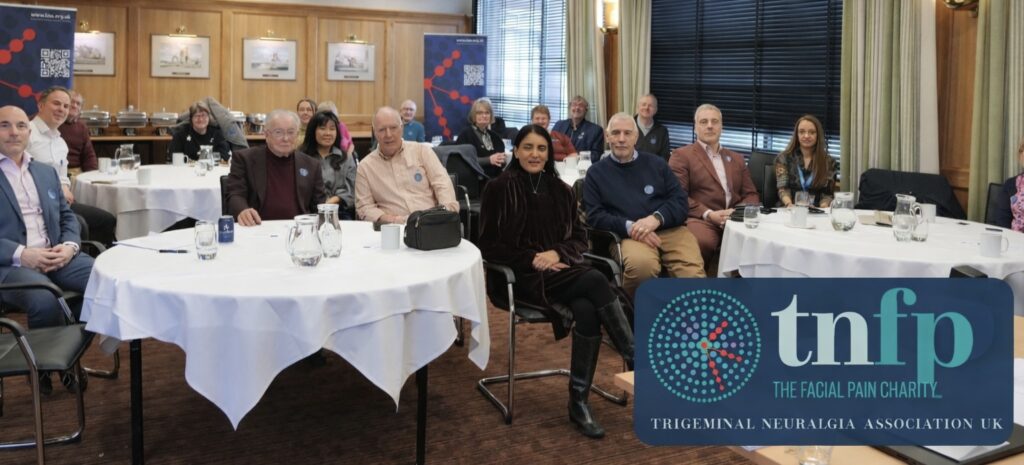
After our AGM, members stayed on for an in-person meet-up. Instead of rushing away, they settled into the room and let their guard down. Some arrived quietly. Others smiled through nerves. A few held themselves very still because pain can strike without warning. Even so, the atmosphere felt warm and safe, and that matters.
One member said something I will not forget:
“Being heard, seen, listened to and believed is saving my life.”
That sentence is not “feedback”. It is the reality of trigeminal neuralgia — and the reason community matters.
The part nobody sees: the shrinking of life
Trigeminal neuralgia can steal ordinary life. Eating becomes complicated. Talking becomes risky. Brushing teeth can feel like a threat. Additionally, cold air, wind, and fatigue can cause people to plan their activities around triggers every hour.
Over time, that constant calculation becomes a way of living. Plans get cancelled. Travel stops. Conversations shorten. As a result, some people begin to withdraw from the very people who love them.
Our Patient Experience Survey captured what many people tell us privately: isolation is not a side issue. People described their world shrinking to “their bedroom or sofa”, and said that meetings gave them “a window back into normal life”.
At Norfolk, I heard the same reality in a different voice:
“I’m lonely. I’ve looked forward to today, and it will help me for weeks to come. I haven’t been out.”
That is not a comment you forget.
“It feels like we are family”
In that room, nobody had to translate their pain. Nobody had to apologise for cancelling plans. Nobody had to pretend they were coping when they were not. As a result, people spoke honestly and listened with care.
One member said, “It feels like we are family.”
Another said: “The charity cares about us, and being with people in the same boat is wonderful.”
Those lines matter because trigeminal neuralgia can be dismissed, misunderstood, or minimised. By contrast, in a support meeting, belief is automatic.
“I thought of ending it all” – and why we take this seriously
Trigeminal neuralgia is sometimes called the “suicide disease”. That phrase exists because some people reach frightening levels of distress. In our survey cohort, 30.9% reported suicidal thoughts linked directly to trigeminal neuralgia, and 64% of those people had never told a health professional.
Those figures are not about everyone in the UK. Rather, they describe an engaged cohort who came into contact with the charity and chose to respond. Even so, the message is clear: people can be in danger quietly, without anyone realising. Trigeminal Neuralgia Support is essential for all.
That is why we treat meetings, helpline support, and peer connection as serious, not optional. A member said:
“I thought of ending it all. Being here gives me hope.”
Another said:
“Being heard, seen, listened to and believed is saving my life.”
What meetings provide, beyond comfort
Support groups are emotional, of course. TN is brutal. Yet the best meetings also do something practical: they help people regain control.
Members share what helps, what harms, what to ask at appointments, and how to manage side effects. For example, the survey reflects the value of peer-to-peer sharing on treatments, coping strategies, and lived experience. People also described ongoing contact between meetings through WhatsApp or email lists, especially during flare-ups and long waits.
So when someone says a meeting helped them, they often mean it gave them information, language, confidence, and community in one place.
The day itself mattered too
The practical details mattered as well. One person described the venue as “warm and inviting”. Another mentioned parking, a clean room, and food that was first-rate. While those details may sound small, they lower the barrier to attendance when pain has already taken so much.
If you are living with trigeminal neuralgia
If you are newly diagnosed, waiting for specialist care, struggling with medication side effects, or simply exhausted by doing this alone, please consider coming to a meeting.
You do not have to speak. You do not have to “be positive”. You do not have to justify your pain. Instead, you can come as you are.
That is what trigeminal neuralgia support is for.
Thank you
To everyone who attended the AGM and stayed for the Norfolk meeting: thank you. Thank you for turning up despite pain, fatigue, fear of triggers, and the effort travel requires. Most of all, thank you for looking after one another in the quiet ways that matter.
Support is not a slogan. It is a room. It is a chair. It is believed.
And sometimes it is, as one member put it, “a window back into normal life”.