
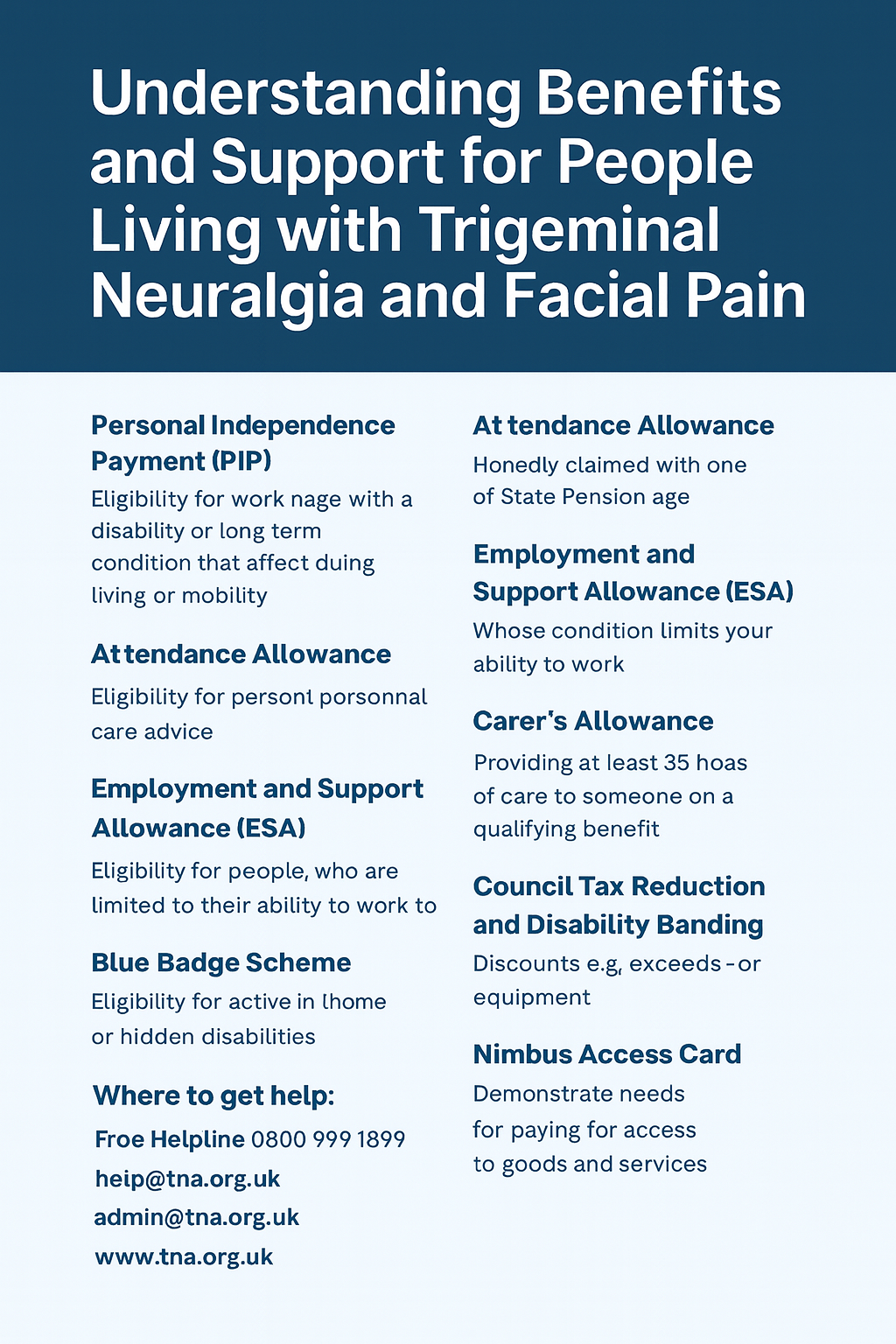
 Understanding Benefits and Support for People Living with Trigeminal Neuralgia and Facial Pain
Applying for and understanding benefits is never simple, but when you live with the unpredictable, exhausting pain of trigeminal neuralgia, even filling out a form can feel impossible.
During our recent national webinar, I was joined by Ellis Jinks from Benefit Answers Ltd, an independent organisation that has helped thousands of people secure vital financial support. Together, we discussed how those living with trigeminal neuralgia or facial pain can access the help they deserve — and why it matters so deeply.
Every day, we hear from people who have waited months for decisions, often while struggling to eat, speak, or even brush their teeth without pain.
The UK welfare system exists to help, but navigating it takes persistence, accurate information, and reassurance that you are not alone.
Personal Independence Payment (PIP)
PIP supports adults aged 16 to State Pension age whose health condition affects daily living or mobility. It is not means-tested, meaning your income and savings are not considered.
For people with trigeminal neuralgia, triggers such as a light breeze, cold air, talking, or brushing teeth can cause unbearable pain.
When completing your PIP form, describe your worst days in clear, honest detail. Explain what you can and cannot do safely or reliably, even if symptoms vary.
If your application is refused, do not give up. Many decisions are overturned on appeal once the full impact of the condition is understood. Request a Mandatory Reconsideration, and if necessary, appeal to an independent tribunal.
Fact: Around half of all PIP appeals succeed once additional medical or personal evidence is submitted.
Attendance Allowance
Attendance Allowance helps those over State Pension age who need supervision or help with personal care because of illness or disability. It is not means tested and does not depend on whether someone currently provides care.
If you experience frequent pain attacks, or if you need someone nearby for reassurance or assistance, include this clearly in your application. Awards are based on how much help you need, not how much you receive.
Tip: Keep a pain diary for at least a week. It helps demonstrate how unpredictable and severe trigeminal neuralgia can be.
Employment and Support Allowance (ESA)
ESA supports people who cannot work because of illness or disability.
You may qualify if you are employed, self-employed, or unemployed, provided your ability to work is limited.
Trigeminal neuralgia symptoms often fluctuate, with severe flare-ups followed by short periods of relief.
The assessment focuses on how this affects your ability to work consistently and safely. Those in the support group receive a higher rate and fewer work-related requirements.
Fact: Medical assessments should consider fluctuating conditions — always explain that your “good days” are unpredictable and rare.
Universal Credit
Universal Credit is a means-tested benefit for people on low incomes or unable to work because of illness or disability.
If you receive PIP or ESA, you may qualify for additional disability elements within Universal Credit.
Always update your journal if your condition changes. A detailed record of medical reviews, hospital visits, or medication changes can strengthen your case.
Carer’s Allowance
Carer’s Allowance supports those providing at least 35 hours of care a week to someone receiving PIP, Attendance Allowance, or Disability Living Allowance.
Caring for someone with trigeminal neuralgia is not just about physical assistance. It includes emotional support during attacks, helping with medication, and providing stability when pain makes speech or concentration impossible.
Carers make an extraordinary difference — and this allowance recognises that work.
Council Tax Reduction and Disability Banding
Local councils may reduce council tax for people on low incomes or where a home has been adapted for disability needs.
Adaptations might include a downstairs bedroom, accessible bathroom, or medical equipment.
Even if you have not made changes to your home, you may still qualify for Council Tax Reduction based on income and health circumstances.
Contact your local authority directly for an assessment.
Blue Badge Scheme
The Blue Badge scheme allows people with mobility or hidden disabilities to park closer to their destination.
Although trigeminal neuralgia is not primarily a mobility condition, medication side effects or extreme fatigue can make travel difficult.
Applications should include medical evidence explaining how your condition limits your ability to travel safely or manage journeys independently.
Nimbus Access Card
The Nimbus Access Card costs £15 per year and helps people communicate their access needs quickly and discreetly.
It can be used for attractions, theatres, and transport services offering concessions for disabled visitors.
For people with invisible disabilities such as trigeminal neuralgia, it provides instant recognition of legitimate access needs and can make public experiences less stressful.
Free Professional Advice to help with Understanding Benefits
Benefit Answers Ltd offers a free question-and-answer service with in-house benefits experts and provides independent legal support for complex cases.
Contact them at www.benefitanswers.co.uk or email [email protected].
Additional free help is available from:
-
Citizens Advice – www.citizensadvice.org.uk
-
Welfare Rights teams – available via local councils
-
Age UK – www.ageuk.org.uk
-
Turn2Us – www.turn2us.org.uk
No one should face this process alone. Support exists, and persistence truly pays off.
Final Thoughts on Understanding Benefits
Every benefit form, every letter, every call — they all take energy that people living with trigeminal neuralgia often do not have.
Yet each step matters. Each application is a stand for fairness, dignity, and recognition of what this invisible disability really means.
At TNA UK, we understand how isolating and exhausting the fight for support can be. We will continue to campaign for faster diagnosis, improved understanding, and fair access to help for everyone living with this devastating condition.
If you need guidance or someone to talk to, call our free helpline on 0800 999 1899 or email [email protected].
Together, we can make sure that no one living with trigeminal neuralgia faces this journey alone.
SEO Meta Description:
A complete, fact-checked guide to UK benefits for people living with trigeminal neuralgia and facial pain, written by Aneeta Prem MBE, CEO of TNA UK. Includes advice on PIP, ESA, Attendance Allowance, Carer’s Allowance, and more.
Trigeminal neuralgia benefits the UK
financial help for neurological conditions, disability support for chronic pain, hidden disability benefits UK