 Trigeminal neuralgia PIP: how facial pain can meet the test
Disability benefits are back in the news. Much of the public debate is broad, political and often unhelpful. For people living with trigeminal neuralgia and facial pain, the real question is more practical: when severe pain affects eating, washing, speaking, travelling and daily function, can that meet the PIP test? In many cases, yes. The key is not the diagnosis on its own. What matters is what the condition stops a person from doing in ordinary life.
Government PIP review
In July 2026, the Government published an interim report on Personal Independence Payment. The Timms Review examined how the current PIP system works for disabled people.
The report raised serious concerns about the assessment process. Many people described it as stressful and inconsistent. Others said decisions did not always reflect the reality of daily life.
However, the report does not change the current PIP rules. Existing awards and assessment criteria remain the same. Final recommendations are expected later in 2026.
This review matters to people living with trigeminal neuralgia and facial pain. These conditions can fluctuate, and their effects are often invisible. As a result, an assessment may not capture the full impact of the pain.
For now, claimants should continue to explain how their condition affects everyday activities. They should also give clear examples. The assessment must consider whether an activity can be completed safely, repeatedly, to an acceptable standard and within a reasonable time.
What the PIP test actually asks
The legal heart of a trigeminal neuralgia PIP claim is not “my condition is serious”. The real question is: “What can I not do reliably?”
DWP guidance says assessors must consider whether a claimant can carry out an activity safely, to an acceptable standard, repeatedly and within a reasonable time period. If a person cannot do that, the activity may meet a lower descriptor. A reasonable time period means no more than twice as long as a non-disabled person would usually take.
This point matters for TN and facial pain. Many people can do something once, or on a better day, but not often enough, not safely enough, or not without serious pain. Someone may manage one meal, one phone call or one journey, then pay for it afterwards. Under the PIP framework, reliability sits at the centre of the case.
Where trigeminal neuralgia PIP claims can be strongest
Preparing food
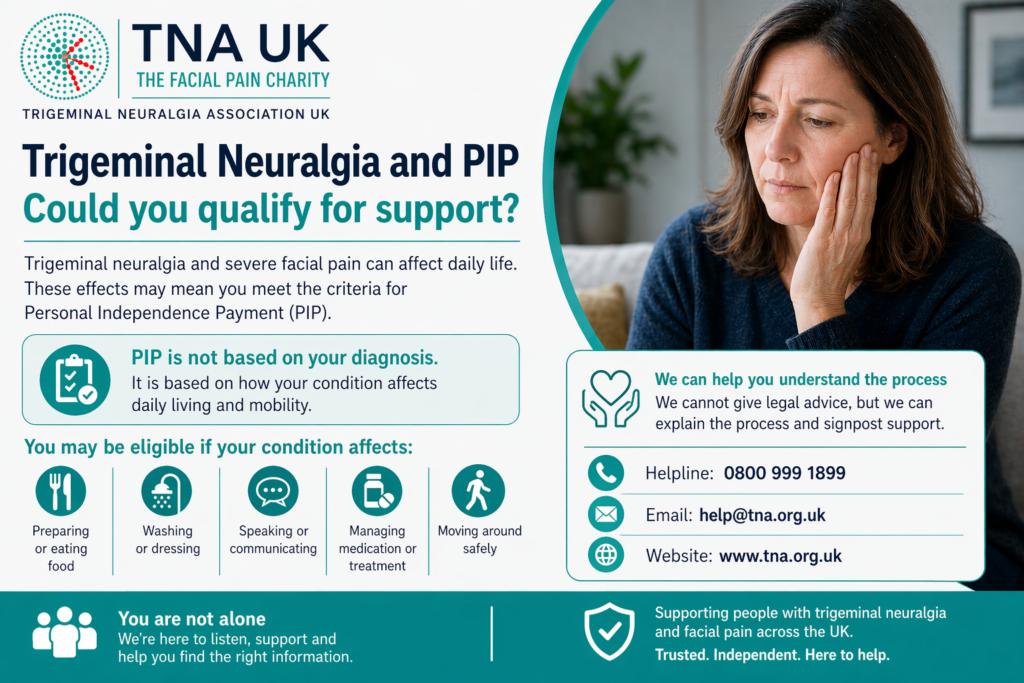
Preparing food is one of the daily living activities in the PIP assessment. The guidance focuses on whether a claimant can prepare food safely and reliably. For someone with TN or facial pain, the difficulty may come from sudden attacks, sedation from medication, broken sleep, poor concentration, or the risk of an attack while using heat or sharp utensils. If preparing a simple meal is unsafe or unrealistic, that may be relevant to the claim.
Eating and drinking
Facial pain can directly affect eating and drinking. The NHS lists chewing and swallowing as recognised triggers for trigeminal neuralgia attacks. That does not mean everyone with TN scores under this activity. However, it does create a proper legal route where pain repeatedly interferes with taking nutrition. A person who cannot chew normally, avoids certain foods, delays meals, or eats only with difficulty may be describing exactly the kind of functional problem PIP is meant to assess.
Washing and bathing
Washing and bathing is another specific PIP activity. The NHS lists washing your face as a common trigger. For a person with TN, that may mean avoiding water on one side of the face, rushing hygiene because pain is expected, or leaving part of the face inadequately washed. If washing cannot be done to an acceptable standard, repeated when needed, or completed without triggering severe pain, that is relevant under the PIP test.
Speaking and communication
Talking also appears on the NHS list of triggers. The PIP framework includes talking, listening and understanding within the daily living activities. Some people shorten conversations, avoid calls, stop mid-sentence, or limit speech because talking aggravates the pain. That does not create automatic entitlement. It does show how the condition can fit the legal structure.
Planning and following journeys
Mobility is not only about walking distance. The DWP includes planning and following a journey as a mobility activity. The NHS lists a cool breeze, air conditioning and vibrations such as walking or travelling in a car as possible triggers. For some people with facial pain, that makes leaving the house, using transport or travelling in ordinary conditions is unpredictable and difficult. The evidence must stay specific to the individual, but the route through the PIP test is real.
What this means in practice
This is where many claims either strengthen or weaken.
Writing “I have trigeminal neuralgia” is not enough. A better approach is to describe what happens in daily life. For example:
“I cannot wash my face properly because touching that side of my face can trigger electric shock pain.”
“I cannot eat normally because chewing and swallowing trigger attacks.”
“I avoid speaking for long because talking makes the pain worse.”
“I cannot prepare food safely when pain is severe or when medication leaves me drowsy.”
Those statements are not dramatic. They are concrete. They show function. That is what the assessment looks for.
Good evidence does not simply repeat the diagnosis. It shows daily impact. Useful material may include GP or consultant letters, medication records, notes about side effects, pain diaries, and truthful examples of what happens when pain strikes during eating, washing, speaking or going out. The aim is not to exaggerate. The aim is to describe ordinary life accurately enough for the legal test to be applied properly.
Why this matters to TNA UK readers
At TNA UK, we know this issue is not theoretical. People are trying to manage severe pain and keep their lives together at the same time. Some lose work altogether. Others remain in work, but only on limited or reduced hours because of the severity of their condition. Clear information matters for that reason. PIP is not a reward for being ill. It is meant to reflect the extra burden of living with a condition that affects ordinary daily life.
Quote from Aneeta Prem MBE, CEO of TNA UK
“At TNA UK, we are supporting people with trigeminal neuralgia and facial pain who are facing real financial hardship. We know that some are losing their jobs, while others are still working but only on limited or reduced hours because of the severity of their condition. At the same time, applying for support is becoming harder. We see the strain this places on people who are trying to manage severe pain while also trying to hold their lives together.”
The safest and strongest conclusion
The legally sound position is not that everyone with trigeminal neuralgia should get PIP. That would be too broad. The stronger and more accurate position is this: trigeminal neuralgia and facial pain can qualify for PIP where they affect daily living or mobility safely, to an acceptable standard, repeatedly, and within a reasonable time.
That argument fits the DWP guidance. It also helps patients understand the test. Most importantly, it gives readers something useful rather than vague.
Sources
Department for Work and Pensions, PIP assessment guide part 1: the assessment process.
Department for Work and Pensions, PIP assessment guide part 2: the assessment criteria.
NHS, Trigeminal neuralgia symptoms.
TNA UK trigeminal neuralgia page.
Aneeta Prem, London, First published 21 April 2026. Updated 24 July 2026.