SUNCT causes frequent, very short attacks of severe one-sided head or facial pain with both eye redness and tearing on the same side. It is rare and should be assessed by a neurologist or headache specialist.
SUNCT stands for short-lasting unilateral neuralgiform headache attacks with conjunctival injection and tearing.
It belongs to the trigeminal autonomic cephalalgias, a group of primary headache disorders with one-sided pain and cranial autonomic symptoms.
SUNCT can resemble TN, but prominent eye redness and tearing are defining features.
Signs And Symptoms
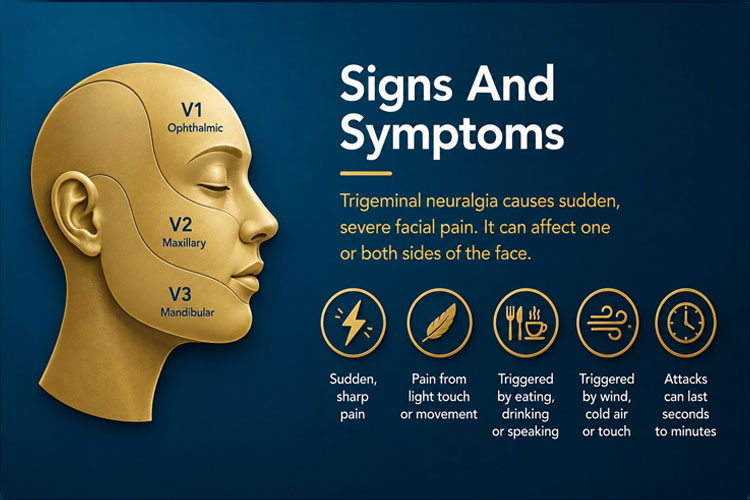
Severe one-sided stabbing, shooting or burning pain
Pain around the eye, temple or other trigeminal areas
Attacks lasting seconds to minutes
A red eye and tearing on the painful side
Many attacks in a day
Possible eyelid swelling, nasal symptoms or facial sweating
Triggers And Patterns
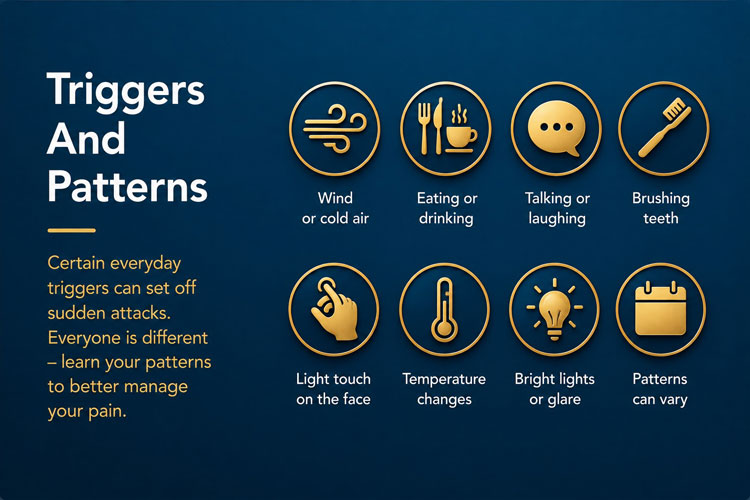
Touching the face, chewing, speaking or movement may trigger attacks
Attacks can occur spontaneously
Unlike TN, there may be little or no refractory period after a triggered attack
Assessment Or Diagnosis
Diagnosis is clinical and based on attack duration, frequency and autonomic symptoms.
MRI is usually considered because secondary causes can mimic SUNCT or SUNA.
Specialist review is important because treatment differs from TN and cluster headache.
Treatment And Management
Treatment should be led by a neurologist or headache specialist and usually focuses on preventive medicines.
Severe uncontrolled periods may require treatment in a specialist setting.
Do not start, stop or change treatment without specialist advice.
Living with the condition
Frequent attacks can make eating, speaking, sleep and leaving home difficult. Record attack length, number, triggers and exactly which eye or nasal symptoms occur.
What you can do today
Record the exact duration and number of attacks each day, the painful side and whether both eye redness and tearing occur.
Note touch, chewing, speaking or movement triggers and whether another attack can be triggered immediately.
Seek specialist review because SUNCT treatment differs from TN and cluster headache.
During severe periods, protect food, fluids, sleep and medication routines and tell the specialist if these are becoming difficult.
Preparing for your appointment
Exact side and location of pain
Attack duration and number of attacks each day
Whether both eye redness and tearing occur on the painful side
Other eyelid, nasal, sweating or facial symptoms
Touch, chewing, speaking or movement triggers and whether attacks also occur spontaneously
Medicines tried, treatment response and effect on eating, speech, sleep and work
When pain is affecting your wellbeing
Very frequent attacks can make eating, speaking, sleeping and leaving home difficult.
Support for sleep, anxiety, low mood and coping can sit alongside medical treatment. It does not mean the pain is imagined.
If you feel unable to keep yourself safe, call 999 or go to A&E. For urgent mental-health help that is not an immediate emergency, use NHS 111 and select the mental-health option where available.
For family members and carers
Avoid touching known trigger areas without asking.
Help record attack counts, duration and same-sided eye symptoms accurately.
Support food, fluids, sleep and attendance at specialist appointments.
Seek urgent help for a new neurological deficit, vision loss, fever, confusion or a sudden major change.
Frequently Asked Questions
Answers to common questions about SUNCT
Short-lasting unilateral neuralgiform headache attacks with conjunctival injection and tearing.
SUNCT requires both eye redness and tearing. SUNA has one or more cranial autonomic symptoms but not necessarily both.
Yes. Both can cause brief triggered attacks, but SUNCT has prominent autonomic eye symptoms.
A neurologist or headache specialist should confirm the diagnosis and lead treatment.
Related Conditions and Topics
Other facial pain conditions and useful information
This information is for general guidance and does not replace professional medical advice. Always consult your healthcare professional.
Latest News
Pain Awareness Month 2026
What 567 people affected by trigeminal neuralgia and facial pain told TNA UK Pain is usually recorded at the point of care. Much of its impact happens somewhere else: at […]