Facial Pain Awareness Month 2026
Pain you can’t see.
A face can look completely unchanged while pain is deciding whether someone eats, speaks, brushes their teeth, sleeps, works or steps into cold air.
This October, we are focusing on the part of facial pain other people cannot see.
By Aneeta Prem MBE · CEO, TNA UK · 1 October 2026
INVISIBLE DISABILITIES WEEK · 18–24 OCTOBER 2026
This face is artificial. The pain is real.
The colours and lightning in this picture were created using artificial intelligence. They make us stop and look. But the people living with trigeminal neuralgia cannot make their pain light up for the world to see.
You noticed the image. Now see the person.
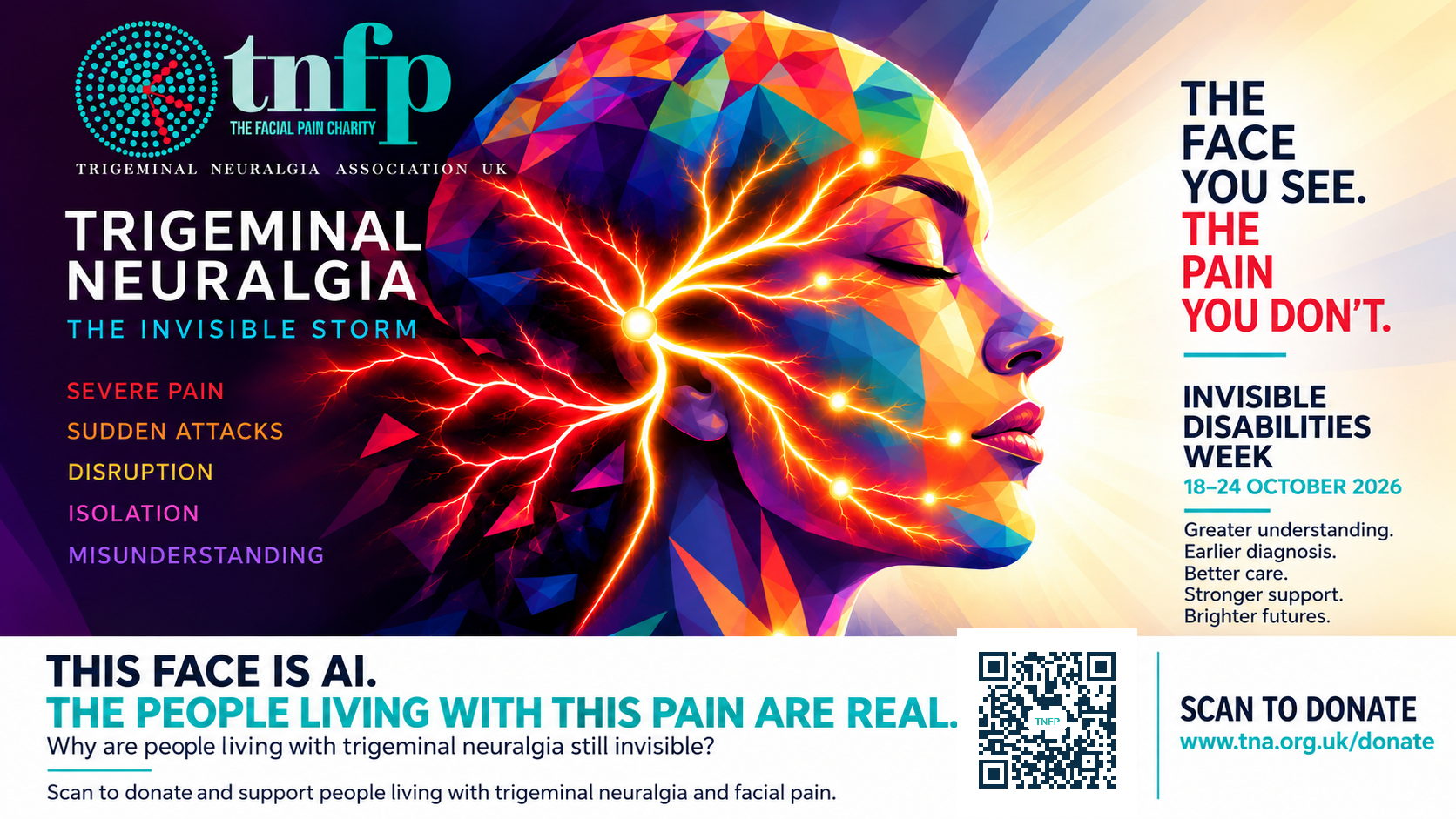
Campaign artwork: AI-generated illustration, not a photograph of a patient or a medical diagram.
Why can trigeminal neuralgia be invisible?
The pain comes from nerve signalling, not necessarily something visible on the skin. The trigeminal nerve carries sensation from the face towards the brain. In classical trigeminal neuralgia, a blood vessel presses on the nerve near the brainstem. Secondary trigeminal neuralgia has another underlying cause; in idiopathic trigeminal neuralgia, the cause is unknown. These changes need not leave an outward mark. Someone may look unchanged while experiencing extreme pain.
A brief encounter tells you very little. Some attacks arrive without warning and last seconds to about two minutes. Pain may return repeatedly, disappear for a time or, for some people, continue as an ache or burning sensation between attacks. The person you meet in a pain-free moment may have endured repeated attacks earlier that day.
The consequences are often hidden as well. Eating, talking, brushing teeth and feeling a breeze can trigger pain. Someone may change what they eat, avoid going out, cancel plans or struggle with work and sleep. Treatment side effects can add to the burden. You may see an ordinary conversation without seeing what it took to get there.
Looking well is not proof of being well. Nor does every person with trigeminal neuralgia experience the same symptoms or level of disability. Listening matters, and so does careful medical assessment: facial pain can have many causes and deserves an accurate diagnosis.
People should not have to make their pain visible to be taken seriously.
This Invisible Disabilities Week, listen without judging by appearances. Share the message, learn about the condition and help us support people affected by trigeminal neuralgia and other facial pain.
Please share the poster with the original credit to TNA UK. On social media, include a clickable donation link alongside the image: www.tna.org.uk/donate/. For information and support, see our trigeminal neuralgia guide and helpline.
Clinical reference: NHS guidance on trigeminal neuralgia.
FACIAL PAIN AWARENESS MONTH · AT A GLANCE
What is Facial Pain Awareness Month?
October is a month for improving understanding of facial pain, the different conditions that can cause it and the effect pain can have on everyday life.
Why can facial pain be invisible?
Severe or persistent pain may not change how a person’s face looks. For some people, facial pain becomes a non-visible disability.
What conditions can cause facial pain?
There is no single diagnosis. Explore our Understanding Facial Pain hub and individual condition guides.
What happens on 7 October?
7 October is Trigeminal Neuralgia Awareness Day. TNA UK’s 2026 campaign is Show TN 3 Fingers.
WHAT PAIN CAN CHANGE
Ordinary things can become difficult.
Facial pain can be triggered or worsened by everyday activities. Not everyone experiences the same pattern, but these are the kinds of moments that can suddenly matter.
EAT
Chewing, swallowing or even contact with food may be difficult for some people.
SPEAK
Talking can provoke attacks in some facial pain conditions.
BRUSH
Trigeminal neuralgia can be triggered by tooth brushing or light touch. If pain feels dental, our Dental Guide explains why careful assessment matters.
SLEEP
Persistent or recurring pain can disrupt rest and recovery.
WORK
Pain, fatigue and medication effects can make concentration and attendance harder. See our practical guidance on work and TN and benefits and financial support.
GO OUTSIDE
Cold air and wind are recognised triggers for some people with trigeminal neuralgia. Watch our guide to TN triggers.
NON-VISIBLE DOES NOT MEAN MINOR
A face can look well. Pain can still be disabling.
For some people, persistent facial pain becomes a non-visible disability. There may be no obvious injury or outward sign that tells another person how severe the pain is or how much it is changing daily life.
The absence of a visible sign is not a measure of severity. Practical support is available through our Helpline and Regional Support Groups.
What you may not see
Fear of the next trigger
Difficulty eating or speaking
Interrupted sleep
Exhaustion after repeated attacks
Avoiding wind, touch or temperature change
Medication side effects
Cancelled plans and lost confidence
WATCH · 7 OCTOBER 2026
Watch the new TN awareness video.
This is the video we want people to see and share this October. It brings together Show TN 3 Fingers and Face of TN for International Trigeminal Neuralgia Awareness Day on 7 October.
The three fingers represent the three main divisions of the trigeminal nerve: V1, V2 and V3. Watch it first — then send it to one person who may never have heard of trigeminal neuralgia.
FACIAL PAIN IS NOT ONE CONDITION
The same place can hurt for very different reasons.
Pain around a tooth may be dental. Pain around the eye may be migraine or a headache disorder. Brief electric-shock attacks point in a different direction from continuous burning or aching pain.
That is what Facial Pain Awareness Month should help people understand: the location of pain is only the beginning of the story.
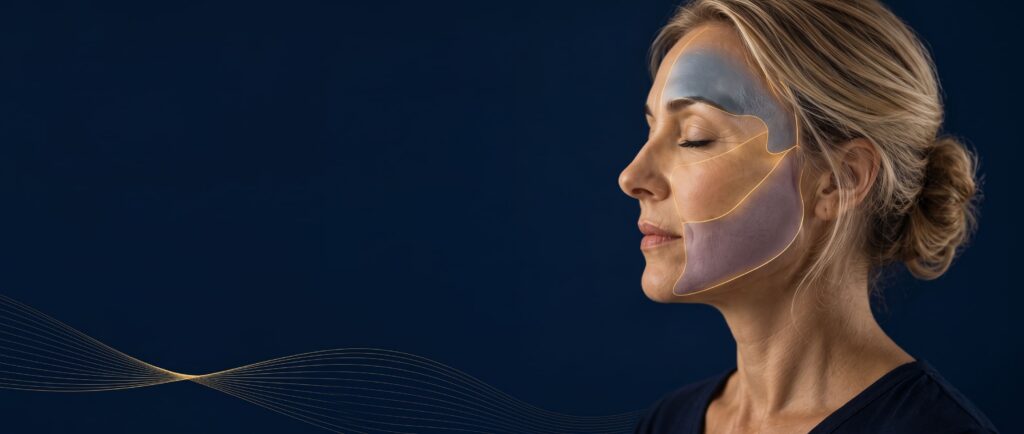
Electric-shock pain
Brief, sudden attacks are a very different pattern from pain that is present for hours or all day.

Burning or altered sensation
Burning, tingling or altered sensation can suggest another pattern that needs careful assessment.
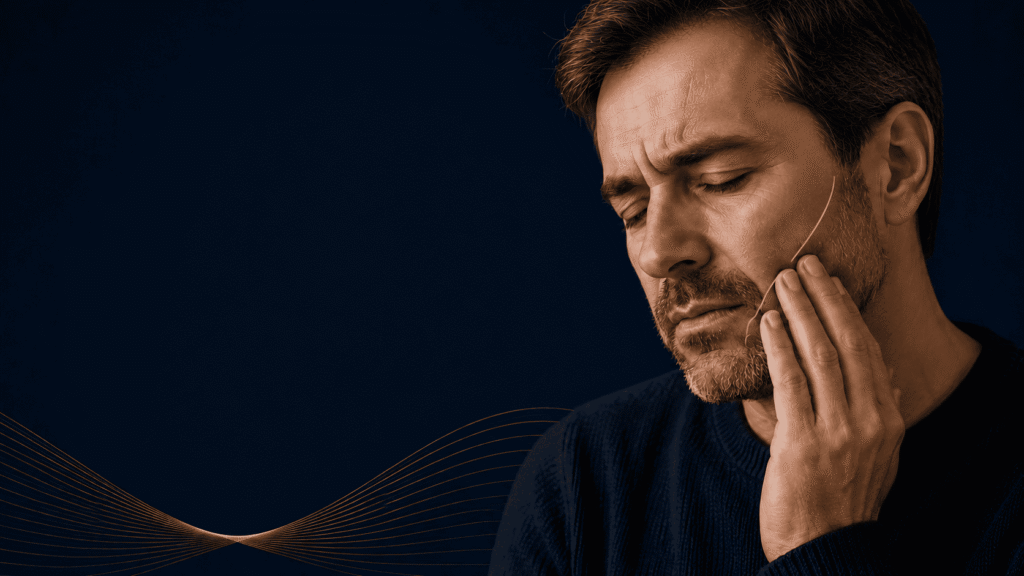
Jaw or tooth pain
Pain felt in a tooth, jaw or cheek may be dental — but the place it hurts does not always reveal the cause.

Pain around the eye or temple
Migraine and some headache disorders can be experienced prominently in or around the face.
Explore the facial pain conditions
These are different conditions, not different names for the same pain. Open any condition below, or use our main guide if you are not sure where to begin.
Make awareness do something.
Awareness is not the finish line. It matters when it changes what happens next.
LEARN
Know that facial pain has many causes. Start with our Understanding Facial Pain guide rather than assumptions.
SHARE
Share one useful page, one patient or clinician video or one story with someone who did not know about facial pain.
BELIEVE
Take pain seriously even when there is nothing obvious to see. If someone needs support, point them to our Helpline.
No one should have to explain invisible pain alone.
For information, support and signposting, use our facial pain resources or contact the TNA UK Helpline.
Prepare for an appointment · Dental Guide · Research · Videos
Clinical information: NHS: Trigeminal neuralgia · NICE: Suspected neurological conditions